
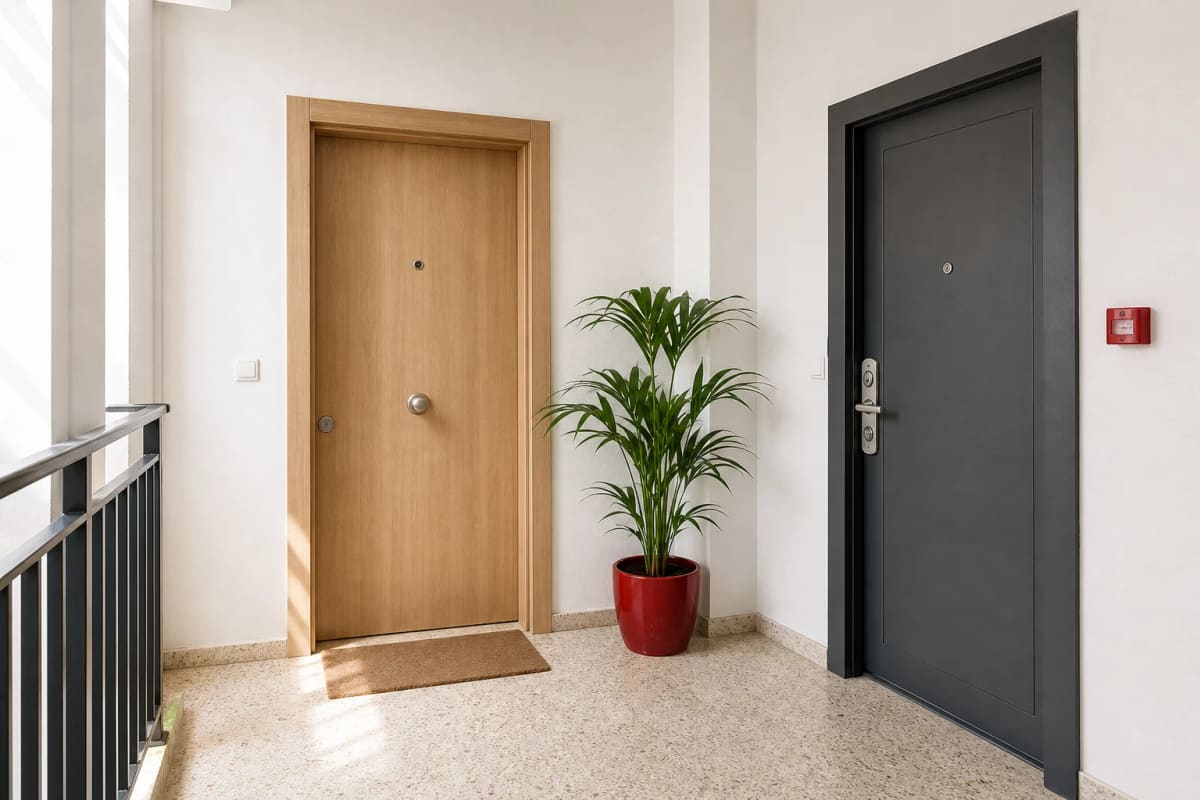
The difference is the structure: a security door is wooden with steel sheets inside, while an armoured door has a steel frame and leaf, a frame anchored into the wall and several locking points. An armoured door is stronger, but a well-reinforced security door gives very reasonable protection for a flat.
What is a security door?
A security door (puerta blindada) is a wooden leaf, usually made of board or chipboard, with one or more steel sheets inside. Those sheets make it harder to cut through the door with tools and give it more rigidity than an ordinary wooden door. It usually comes with a security lock, reinforced hinges and, in many cases, anti-lever hinge bolts on the hinge side.
It is by far the most common front door in Málaga flats. In the apartment blocks of the western district (Cruz de Humilladero, Carretera de Cádiz and La Unión), many homes replaced their solid wooden door with a security door in the 80s and 90s, and those same doors are still in use today, often with the original lock and cylinder.
What is an armoured door?
An armoured door (puerta acorazada) starts from a different idea: the structure is metal. The leaf is built on a steel frame with internal reinforcements, known in the trade as omegas, and is clad on the outside with wooden panels or a lacquered finish, so at first glance it can look like an ordinary door.
What makes it different is the whole package:
- A steel frame or subframe anchored into the wall, not just screwed to a wooden frame.
- Several locking points along the edge, and often at the top and bottom too.
- Heavy-duty hinges and fixed hinge bolts on the hinge side.
- A security lock, frequently with a cylinder protected by a lock guard.
Its resistance is classified under the UNE-EN 1627 standard, which sets classes from RC1 to RC6. The higher the class, the more time and tools are needed to force it in testing. Homes usually have the middle classes; the highest are reserved for very specific uses. Be wary of anyone promising a door that is «impossible to open»: the standard talks about resistance for a period of time, not invulnerability.
What are the main differences?
| Feature | Security door | Armoured door |
|---|---|---|
| Structure | Wooden leaf with internal steel sheets | Steel frame and leaf with reinforcements, clad in wood or lacquered |
| Resistance | Medium; depends heavily on the lock and frame | High; may be certified to an RC class under UNE-EN 1627 |
| Weight | Moderate, a little more than a wooden door | Heavy, due to the amount of steel |
| Installation | On a wooden frame, without major building work | Metal frame anchored to the wall, with building work |
| Locking points | One or several, depending on the lock | Several, spread across the leaf |
| Who it suits | Flats in buildings with a main entrance and neighbours | Detached homes, ground-floor flats or more exposed houses |
How can you tell if your door is a security door or an armoured door?
Without taking anything apart, a few simple checks will give you a fairly reliable idea:
- Look at the edge of the door. Open it and check the edge: on a security door you will see wood or a thin sheet-metal edge; on an armoured door, a continuous metal profile.
- Feel the weight. An armoured door is much heavier and moves with some momentum when you open it.
- Knock on it. A security door sounds like wood, a little hollow in places; an armoured door sounds duller and more metallic.
- Check the hinges. Armoured doors usually have thick hinges and fixed bolts on the hinge side.
- Count the locking points. Turn the key with the door open and see how many bolts come out and where. If they also come out at the top or bottom, it is very likely armoured.
- Look for paperwork or a manufacturer's label on the edge, which sometimes states the resistance class.
Can a security door be reinforced without replacing it?
Yes, and in many flats it is the most sensible option. On emergency call-outs we often find security doors with a good leaf and a thirty-year-old cylinder: the weak point is almost never the wood, but the cylinder and the lock. These are the upgrades that pay off most:
- A quality anti-bump cylinder. This is the foundation. A cylinder protected against bumping, picking, drilling and snapping completely changes how secure the door is. We fit them through our lock cylinder replacement service, and explain the technique in what lock bumping is and how to prevent it.
- Armoured lock guard. It covers the cylinder so it cannot easily be gripped or drilled. See our armoured lock guards.
- Security deadbolt. It adds a second anchoring point at another height on the door. You will find the details under security deadbolts.
- Multipoint lock. If the door only locks at one point, replacing the lock with a multipoint one spreads the load along the whole edge.
Before reinforcing, check the frame: if it is loose, rotten or the door has dropped, any upgrade loses effectiveness.
Which door suits your home in Málaga?
- Flats in blocks with a main entrance, such as those in the western district or the Centre: a security door in good condition with a security cylinder, lock guard and deadbolt is usually enough.
- Ground-floor flats with access from the street or a courtyard: they are more exposed, so it is worth reinforcing as much as possible or considering an armoured door.
- Second homes in Rincón de la Victoria or Torremolinos that stand empty for weeks: protecting the cylinder with a lock guard is the priority, and keep an eye on the effect of salt air on the fittings.
If you already have an armoured door, we work on those too: we can open it in an emergency, change its cylinder or lock and reinforce it with a lock guard and deadbolt. What we do not do is supply or install complete doors.
When should you call a locksmith?
Call if your security door still has its original cylinder, if it only locks at one point, if you have had an attempted break-in or if the key is starting to turn stiffly. A locksmith checks the leaf, the frame and the lock, and suggests a tailored upgrade without replacing the door. If the problem is the lock itself, see our lock change service in Málaga.
Frequently asked questions
Is a security door safe?
It can be fairly safe if it is in good condition and has a security cylinder, a lock guard and, ideally, a deadbolt. A security door with an old cylinder is vulnerable, because attacks usually target the cylinder, not the leaf.
What does RC mean on an armoured door?
It is the resistance class under the UNE-EN 1627 standard, from RC1 to RC6. It shows how the door performs against forced entry in laboratory tests. The higher the class, the stronger the door.
Can the cylinder of an armoured door be changed?
Yes. Armoured doors use euro cylinders or manufacturer-specific ones, and they can be replaced with a more secure model, measuring the door carefully so it does not stick out.
Can an armoured door be opened if I lose my keys?
Yes, an experienced locksmith can open it, although it usually takes more work than a security door. In many cases the cylinder is the point of entry and is then replaced with a new one.
Is a lock guard worth fitting on a security door?
Yes. It is one of the most effective upgrades, because it protects the cylinder against snapping and drilling. Ideally, combine it with a quality anti-bump cylinder.
Related services
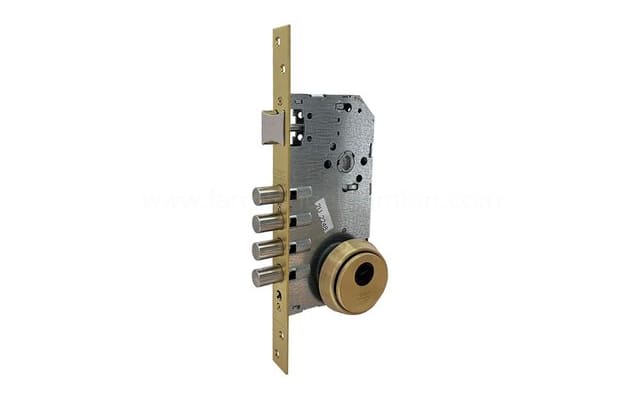
Lock change
We change mortice and multipoint locks, security door locks, metal shutter locks and building entrance door locks throughout Málaga city.
From €80View service →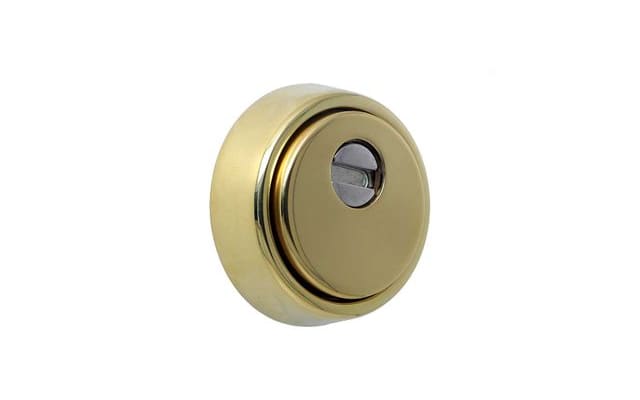
Armoured lock guards
We fit armoured lock guards and cylinder protectors in Málaga to stop the cylinder being snapped, drilled or broken.
From €150View service →